


The Role of Collagen and Nutrition in the Horse’s Joint Health
13/02/2026Electrolyte Loss in Horses: What the Evidence Actually Supports
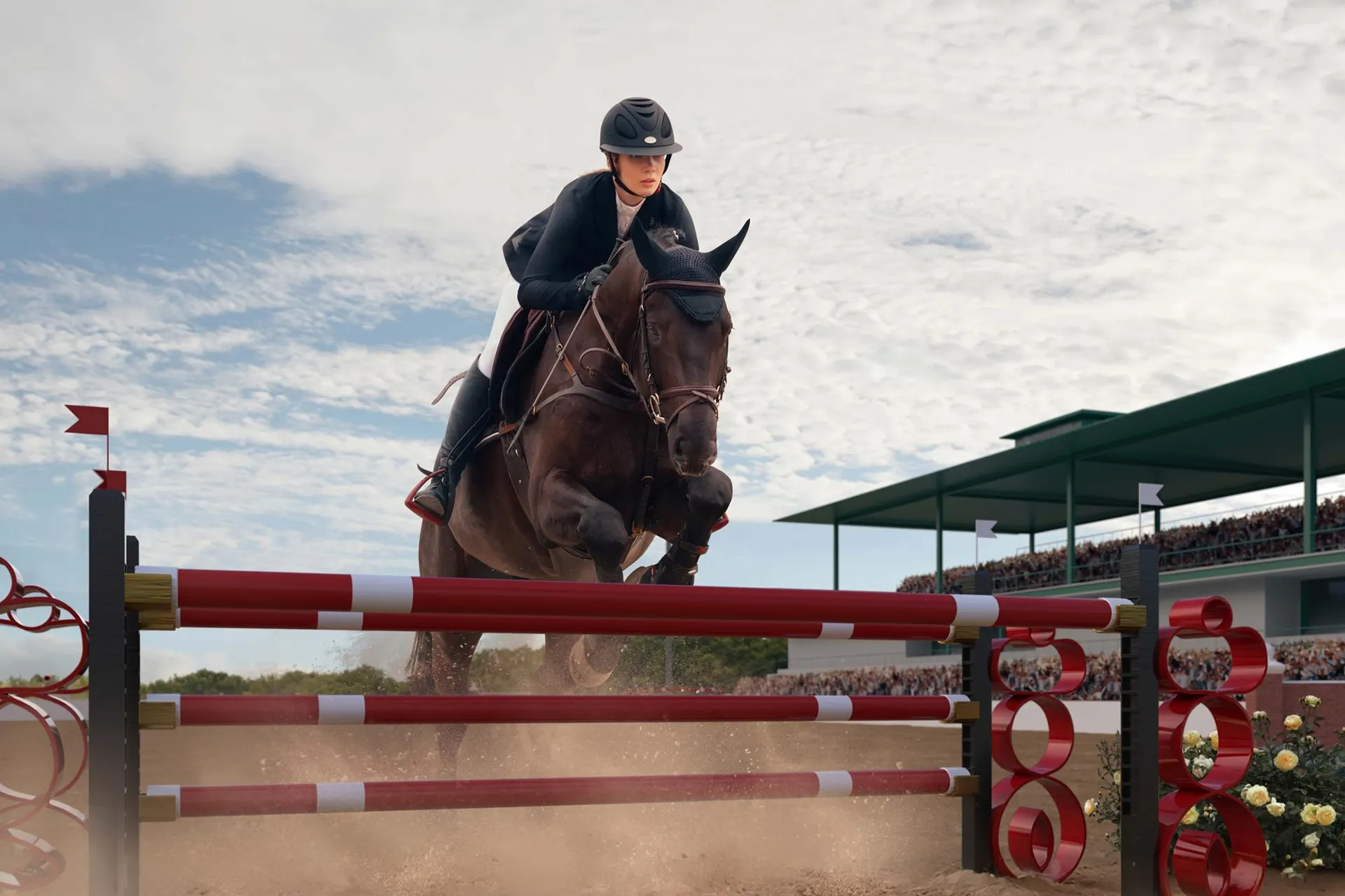
Joints are the silent engine of equine performance. From show jumping and dressage horses to recreational horses, joint health determines mobility, endurance, and long-term quality of life.
But what role does collagen actually play? And how does nutrition influence the integrity of cartilage and connective tissues?
In this article, we explain how to support your horse's joints from the inside out.
The composition of equine sweat
Equine sweat is hypertonic relative to plasma. Sodium concentrations approximate or slightly exceed plasma levels, chloride is substantially higher, and potassium reaches ten to twenty times serum concentrations (McCutcheon & Geor, 1998, Veterinary Clinics of North America: Equine Practice). In practical terms, reported average composition figures place sodium at approximately 3.5g per litre, chloride at approximately 6g per litre, and potassium at approximately 1.2g per litre, with smaller contributions from calcium and magnesium (Trainer Magazine, drawing on published sweat composition data). Sodium and chloride together account for the majority of the mineral load lost in sweat. The scale of loss under exercise and heat
The scale of loss under exercise and heat
Fluid losses of 10 to 15 litres per hour have been documented during endurance exercise under hot environmental conditions (Flaminio & Rush, 1998). At these volumes, the cumulative electrolyte loss within a single session of sustained work becomes substantial, irrespective of whether visible sweating appears extreme. This is a critical point for management: a horse can be losing clinically significant amounts of sodium, chloride, and potassium well before visible signs of distress appear.
Why electrolyte status affects more than hydration
Sodium, potassium, calcium, and magnesium are fundamental to neuromuscular function, including the contraction-relaxation cycle of skeletal muscle, nerve signal transmission, and the maintenance of fluid distribution across intracellular and extracellular compartments. Depletion of these ions during prolonged exercise has been linked to fatigue and muscle cramping, and progressive depletion can compromise the sweating response itself, creating a feedback loop in which thermoregulatory capacity declines as electrolyte status worsens (Kentucky Equine Research, citing Crandell).
Acid-base considerations
Prolonged submaximal exercise in horses tends to produce mild alkalosis. Waller and Lindinger's controlled crossover research (published in the Journal of Physiology, with a related acid-base analysis in Veterinary Science, 2022) found that an 8-litre dose of a balanced, hypotonic oral electrolyte solution administered approximately one hour before exercise abolished the mild alkalosis typically seen with water alone, whereas smaller volumes of 1 to 3 litres produced minimal or no measurable effect. This is an important methodological point: the benefit observed was volume-dependent, and studies using lower doses or different formulations have not consistently replicated comparable effects.
Preloading: a genuinely mixed evidence base
The concept of "preloading," administering electrolytes before exercise or transport rather than only afterwards, has produced some encouraging findings. Schott and colleagues found that preloading two hours before submaximal exercise was associated with improved patterns of rehydration in novice competition horses compared with reloading after exercise. Waller and Lindinger's 2021 work demonstrated that horses preloaded with electrolytes lost less fluid and fewer ions from extracellular compartments in soft tissue during exercise and recovery, compared with water alone.
However, the evidence is not uniform. A randomised trial examining high-dose oral sodium chloride and potassium chloride supplementation in horses competing in 80km endurance rides found no detectable competitive advantage beyond an increase in water intake, and the authors noted that the elevated serum electrolyte concentrations produced by the high-dose protocol might not be appropriate for endurance horses (PubMed, PMID 17402386). This finding is a useful corrective against the assumption that more electrolyte supplementation is automatically beneficial. Lindinger's 2022 review in Veterinary Science similarly frames oral electrolyte and water supplementation as supportive of physiological balance rather than as a guaranteed performance enhancer.
Practical assessment in the field
Clinical signs that may indicate fluid and electrolyte depletion include reluctance to drink, dry or tacky mucous membranes, a skin tent at the point of the shoulder that takes longer than two seconds to flatten after pinching, and a capillary refill time exceeding two seconds (Kentucky Equine Research; Pennsylvania State University Extension). None of these signs is individually diagnostic, and results vary with age and individual variation in skin elasticity, but taken together they provide a reasonable field-level indication warranting closer attention or veterinary consultation.
Where supplementation is justified
The current evidence base most clearly supports electrolyte supplementation for horses undertaking heavy or prolonged exercise, transport, or work in hot and humid conditions, where sweat losses are both substantial and sustained. For horses at rest or in light work, a balanced diet combined with free access to plain salt is generally sufficient to meet electrolyte requirements (Lindinger, 2022). Supplementation strategy should account for dose, timing, and the specific demands placed on the individual horse, rather than defaulting to blanket protocols.